
Fall arrest systems are essential for worker safety when operating at heights. Designed to stop a fall and prevent serious injuries, these systems rely on specific equipment that, when used correctly, helps workers avoid ground impact after a fall. Here are five critical pieces of equipment used in a fall arrest system.
Summary: The 5 Essential Components of a Fall Arrest System
A compliant fall arrest system comprises five core components: a full-body harness, a shock-absorbing lanyard, a self-retracting lifeline (SRL), a certified anchor point, and a D-ring connector. These elements work in unison to distribute fall forces across the body and arrest descent before ground impact. According to UK safety standards, critical components like anchor points must withstand at least 5,000 lbs of force to ensure worker safety at height.
Fall Arrest Equipment: Function & Safety Specs
| Equipment | Primary Role | Critical Safety Metric |
| Full-Body Harness | Distributes fall force to large muscles | Must be snug; connects worker to system |
| Shock-Lanyard | Connects harness to anchor | Limits arrest force to <900 lbs |
| Self-Retracting Lifeline | Minimizes fall distance | Locks instantly; ideal for high mobility |
| Anchor Point | Secure system attachment | Must withstand 5,000 lbs of force |
| D-Ring Connector | Links harness to lanyard/SRL | Keeps worker upright during arrest |
1. Full-Body Harness
A full-body harness is the primary piece of equipment in any fall arrest system. Worn by the worker, it distributes the force of a fall across the body’s larger muscle groups, minimizing the risk of injury. A full-body harness includes shoulder, chest, and leg straps, which allow it to securely support the worker during a fall. This harness connects to other components of the fall arrest system, making it the key link between the worker and the safety gear.
Harnesses must be fitted properly, ensuring that all straps are snug without restricting movement. An ill-fitting harness may fail to adequately distribute force during a fall, leading to injury. For this reason, regular inspections and proper adjustments are crucial.
2. Shock-Absorbing Lanyard
A shock-absorbing lanyard is the component that connects the full-body harness to the anchor point. Its primary purpose is to reduce the force exerted on a worker’s body during a fall. When a fall occurs, the lanyard stretches slightly to absorb energy, decreasing the sudden impact that could otherwise cause injury.
There are various types of lanyards, but shock-absorbing lanyards are specifically designed for fall arrest systems. They can limit the fall arrest force to within safe levels, typically around 900 pounds or less. Properly choosing and securing the lanyard ensures the worker’s body absorbs minimal impact force during a fall.
3. Self-Retracting Lifeline (SRL)
A self-retracting lifeline (SRL) is another connection option that provides both freedom of movement and enhanced fall protection. Unlike a lanyard, the SRL retracts and extends as the worker moves. In the event of a fall, it quickly locks to stop descent, minimizing the distance the worker can fall.
The SRL provides a continuous, taut connection and is ideal for environments where workers need mobility. Because of its design, the SRL can arrest falls faster than a standard lanyard, making it a preferred option in many high-risk workplaces.
4. Anchor Point
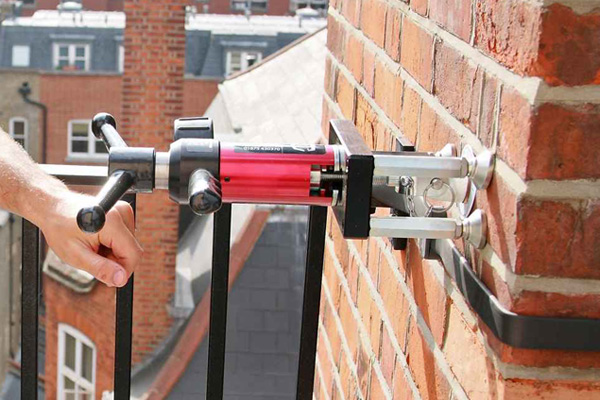
An anchor point is a secure connection point for the fall arrest system, providing the attachment for the lanyard or SRL. Anchor points must be capable of supporting a significant load, often required to withstand at least 5,000 pounds of force according to safety standards.
Proper anchor points vary by work environment and may include fixed structures like steel beams or specialized portable anchors. Choosing a reliable anchor point ensures the stability of the fall arrest system, so it’s critical to assess the suitability of each anchor point before use.
5. D-Ring Connector
The D-ring connector, usually located on the back of the harness, is a small but crucial piece that connects the harness to the lanyard or SRL. Made from strong materials like steel, the D-ring ensures the lanyard or lifeline remains securely attached to the worker.
Positioned between the shoulder blades, the D-ring keeps the worker upright during a fall, helping to reduce the risk of injury from improper body positioning. Regular inspection of D-rings is important to check for wear or damage.
Conclusion
A fall arrest system is a coordinated setup of several essential pieces of equipment, each designed to protect workers in case of a fall. The full-body harness, shock-absorbing lanyard, self-retracting lifeline, anchor point, and D-ring connector all work together to provide a safe, effective system. Understanding each piece of equipment and its role helps in selecting and using fall arrest systems correctly, ensuring worker safety at heights.